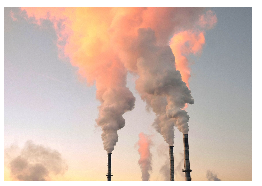
Turning syenite rock into cheaper, more-efficient alternative to regular potassium fertilizer
Researchers from Morocco have developed a way to produce fertilizer from local African rocks, which could make it easier for farmers to grow the crops needed to feed local residents.
To learn more about their research, read the article below:
Fertilizer made from local rocks could help feed hungry in Africa

Phosphorus recycled from waste materials moves further in soil, making it easier for plants to access
Phosphorus is an essential nutrient for plant growth, yet many soils lack enough of it to support strong crop yields. Farmers often rely on fertilizers made from mined phosphorus, a limited, non-renewable resource. International researchers have uncovered new insights into how phosphorus from recycled materials moves through soil-offering guidance to support more sustainable fertilizer use.
To learn more about their research, read the article below:
More sustainable agriculture: Recycled fertilizers could be part of the solution

McMaster researchers develop alternative to "gold standard" Haber-Bosch process
As our world’s population grows, so does demand for ammonia – a key ingredient in fertilizer. The International Renewable Energy Agency estimates that ammonia production must quadruple by 2050 to feed the increase in global population. Researchers from McMaster University have developed a process that is green and faster, generates ammonia more efficiently from nitrate – a common water pollutant – and is “cleaner” because it uses renewable electricity rather than fossil fuel.
To learn more about their research, read the article below:
Revolutionizing ammonia production: Turning polluted water into clean, valuable chemical

Using copper to convert CO2 to methane could be game changer in mitigating climate change
Researchers from McGill University have designed a new catalyst for converting carbon dioxide (CO2) into methane - a cleaner source of energy - using tiny bits of copper called nanoclusters.
To learn more about their research, read the article below:
New catalyst creates closed "carbon loop" that recycles any CO2 that's produced back into methane.

Synchrotron light helps study the past, prevent corrosion in future
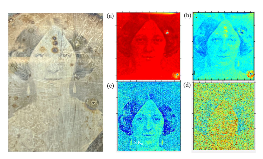
Techniques developed by researchers from Western University for creating images of old, badly tarnished photographs could also be used to study other historic artifacts and fossils and prevent corrosion on modern materials.
To learn more about their research, read the article below:
New imaging techniques could be used to preserve artifacts and fossils
Using pulp and paper waste to scrub carbon from emissions
Researchers at McGill University have come up with an innovative approach to improve the energy efficiency of carbon conversion, using waste material from pulp and paper production.
To learn more about their research, read the article below:
McGill researchers develop new green technology